
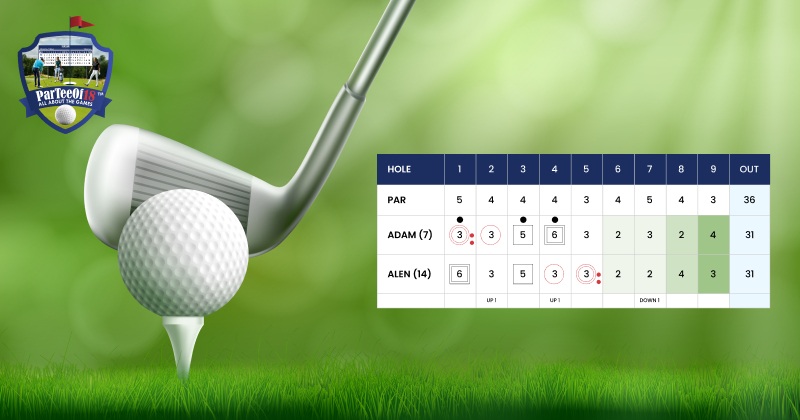
For a new golfer, understanding what to do with their scorecard can be overwhelming. You may be unsure what to write and how to read on the scorecard. Golf scorecards show important details like par scores, hole numbers, and yardage to make the game easy to understand. Whether you are a new or seasoned player, knowing how to read a golf scorecard will help you improve your game. Playing golf is hard, and not understanding your scorecard’s details makes it harder. To make you aware of its importance, the oldest golf scorecard dates back to 1820 in Musselburgh, Scotland. As 2025 approaches, it is common for players to use both traditional paper scorecards and a digital app to accurately and quickly record their performance. The series of events can be difficult to navigate, whether you are a beginner or want to improve your game. Similarly, learning how to improve your golf scorecard experience can make golfing an experience in itself by relating it to a competitive day among friends.
A general overview of the purpose of a golf scorecard will be provided, including reading the key award penalty and scores found on each scorecard. A golf scorecard is essentially used to record golf, and it is intended to cumulatively maintain the player’s skills while also emphasizing areas for improvement or strengths.
Table of Contents
What Is a Golf Scorecard?
At its simplest, a golf scorecard is a record-keeping sheet that allows players to track their performance throughout a round. It typically contains spaces to log each hole’s par, distance, handicap rating, and, of course, the strokes taken by the player.
When you look at a score golf card, you might think it’s just a grid of numbers and boxes. But in reality, it’s the golfer’s narrative of that day—a story of triumphs, challenges, and lessons learned. For professionals, it’s also the official proof of their round and can determine standings in tournaments.
For casual players, a golf card score acts as motivation and helps track progress over time. It can also serve as a friendly competition tool when comparing results with others.
Decoding Symbols on a Golf Scorecard
A golf scorecard may look like a simple grid of numbers, but every column and symbol carries meaning. Understanding these details helps golfers track performance, identify challenges, and play more strategically. Here’s a breakdown of the most common symbols you’ll find.
Par
Par represents the expected number of strokes an expert golfer should take to complete a hole. It provides a benchmark against which your performance is measured. Achieving par means you’ve played the hole as intended, while scoring under or over par highlights your strengths or areas to improve.
Handicap (Stroke Index)
The handicap, often marked as “stroke index,” indicates the difficulty ranking of each hole. A hole rated 1 is the toughest, while 18 is the easiest. Handicaps help level competition by allowing players of varying skill levels to compete fairly, adjusting their scores according to each hole’s challenge.
Yardage
Yardage shows the distance from the tee box to the hole, often varying for men, women, and juniors. These numbers are critical for choosing the right club and planning your strategy. Knowing the yardage ensures better control of your shots, helping you manage both long drives and short approaches.
Score Boxes
Each hole has a dedicated box where players record the number of strokes taken. This running log builds the foundation of your game’s narrative. By the end of the round, these boxes reveal your consistency, strengths, and problem areas, turning raw numbers into valuable feedback for improvement.
Anatomy of a Golf Scorecard
A golf scorecard is more than just a sheet of paper—it’s a structured guide that keeps your round organized and comparable. Each section has a purpose, from course details to scoring totals. Understanding its anatomy ensures you can record accurately and use the data to track progress and refine your play.
Course Information
At the top, most scorecards list the course name, logo, slope rating, and sometimes USGA course rating. This information sets the context for the round. It tells you how challenging the course is overall and provides official markers often used in competitive or handicap play.
Hole Numbers and Pars
The backbone of the card is the row of holes, usually numbered 1 through 18. Beside them, you’ll find par values showing expected strokes per hole. This pairing acts as your roadmap, helping you gauge whether each hole is a short par-3, a medium par-4, or a lengthy par-5 challenge.
Handicap Rankings
Every hole has a difficulty ranking called the stroke index, ranging from 1 (hardest) to 18 (easiest). This column is vital when applying handicaps in competitive rounds, as it determines where additional strokes are allocated. For casual golfers, it highlights which holes demand extra focus or careful shot planning.
Player Rows
Below the main hole details, you’ll see blank rows where individual players record their strokes. Typically, one player acts as the scorekeeper for the group. These rows ensure each golfer’s performance is clearly tracked, making it easier to total scores, settle bets, or submit official results for tournaments.
Totals Section
At the bottom or side, scorecards include totals for “Out” (front nine), “In” (back nine), and the overall score. This section consolidates your round into a single number, reflecting your performance for the day. It’s where progress becomes visible, giving you a sense of achievement or areas for improvement.
How Handicaps Work on a Golf Scorecard
Handicaps make golf more inclusive by balancing the competition between players of different skill levels. On a scorecard, handicaps show where extra strokes should be applied, turning a seemingly tough round into a fair contest. Understanding this system ensures both casual games and tournaments remain competitive, enjoyable, and rewarding for everyone.
Stroke Index
The stroke index ranks each hole by difficulty, with “1” being the hardest and “18” the easiest. When applying handicaps, this index decides where strokes are subtracted from a player’s score. It ensures fairness by giving higher-handicap players help on the toughest holes, allowing all golfers to compete on level terms.
Handicap Allowance
Each golfer’s handicap allowance is based on their overall skill level. For example, a player with a 12 handicap gets one extra stroke on the 12 most difficult holes. This system narrows the gap between skilled and less-experienced players, making the match competitive and exciting, regardless of natural ability or experience.
Adjusted Scores
When handicaps are applied, raw scores are adjusted to reflect net performance. For instance, if a player with a stroke on hole 5 takes six strokes on a par-5, their net score becomes five. This adjustment is essential in competitions and ensures that victory depends on strategy and consistency, not just raw talent.
Fair Competition
The purpose of handicaps is not to inflate results but to ensure fairness. Without them, beginners would struggle to compete with advanced players. With them, every golfer has a chance to win, making the game more enjoyable. It transforms the scorecard into an equalizer, rewarding effort, planning, and smart decision-making.
How to Record Scores Step-by-Step
Recording your strokes correctly is one of the most important skills in golf. A properly filled scorecard keeps the game honest, ensures fair competition, and gives you accurate insights into your performance. Whether playing casually or in tournaments, following these steps guarantees clarity and consistency throughout the round.
Step 1: Start at the Tee
Each swing counts as a stroke, beginning from your first shot off the tee. Keep track carefully, as even penalty strokes must be included. This initial step sets the foundation for accurate scoring, so maintaining focus from the start ensures your entire scorecard remains consistent and reliable throughout the round.
Step 2: Mark Strokes After Each Hole
When you complete a hole, record the total number of strokes in the box for that hole. Writing it down immediately prevents mistakes or forgetting later. This habit also builds accountability, ensuring your score reflects every shot and gives a true representation of how you’re progressing through the course.
Step 3: Track Penalties Accurately
Penalties, such as hitting out of bounds or into hazards, must be counted. Add these strokes before finalizing the hole’s score. Ignoring penalties not only disrupts fairness but can also affect competition outcomes. Tracking them properly ensures your scorecard is both legitimate and useful for measuring improvement over time.
Step 4: Keep Scores Honest
Golf is built on integrity, and the scorecard reflects that. Even in casual games, being truthful about your numbers builds trust and respect among players. In tournaments, honesty is non-negotiable, as official golf tournament score cards are reviewed and verified. Accuracy here is essential to preserve the spirit of the game.
Step 5: Tally Totals at the End
Once all holes are played, calculate the front nine (“Out”), back nine (“In”), and overall totals. This final step gives you the full picture of your performance. Clear tallies highlight areas of strength and where you need improvement, turning the scorecard into a tool for reflection and growth.